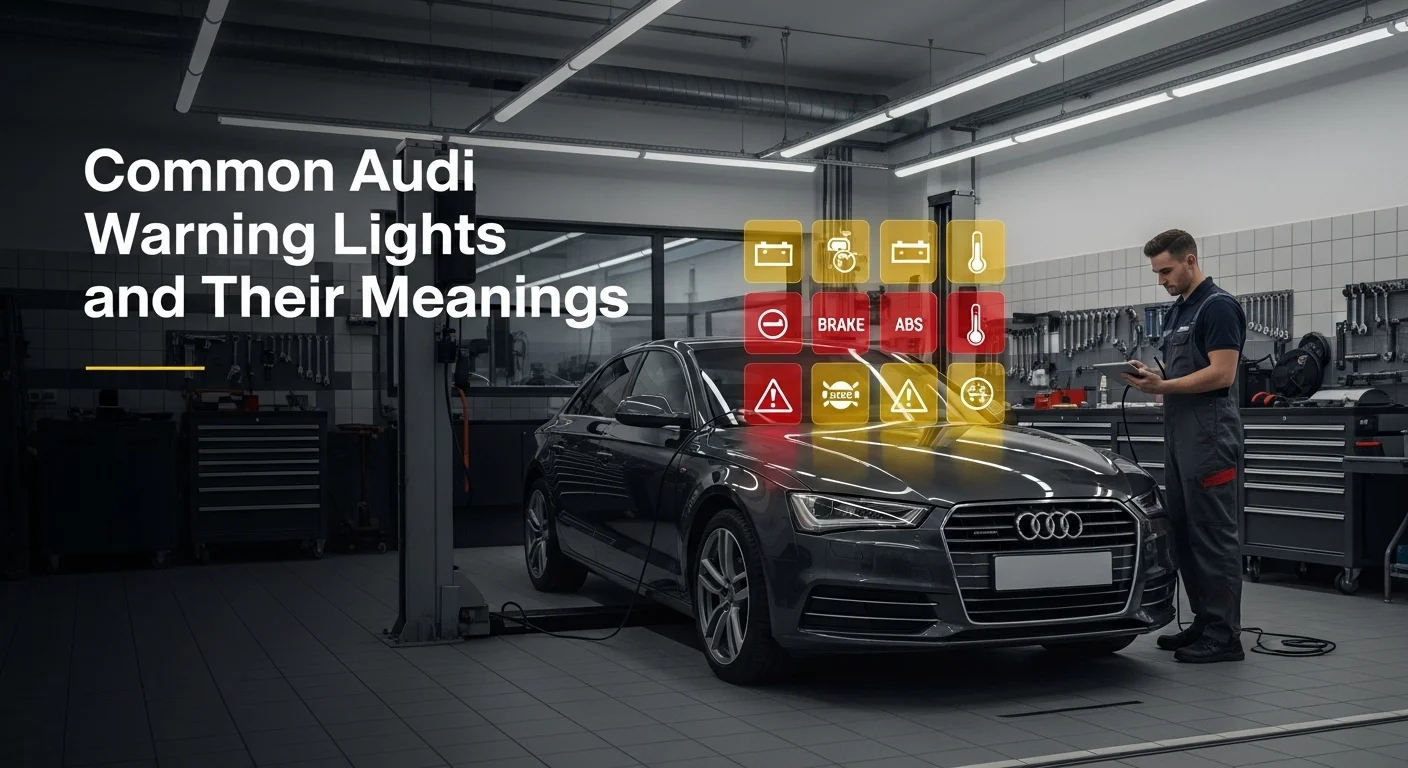
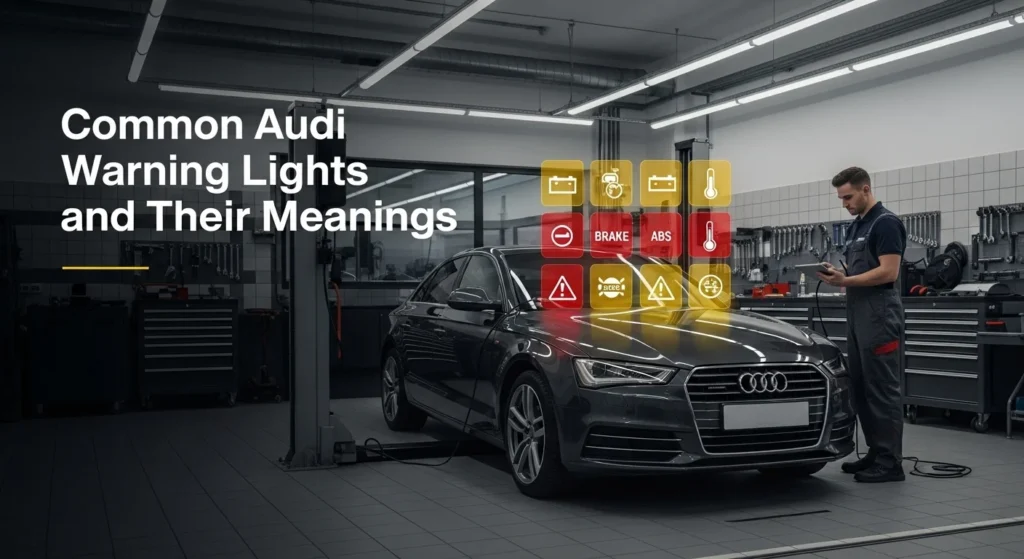
Modern Audi vehicles are equipped with intelligent onboard computers capable of informing the driver about virtually any aspect concerning the health status of his vehicle. One primary method by which your Audi attempts to communicate with you is through those warning lights that appear on your dashboard. They’re not simply icons; they happen to be very critical messages relating to safety, performance or maintenance requirements. Knowing what each warning light signifies will enable you to take appropriate action at the right time thus saving you unnecessary costs in repairs while ensuring that your Audi provides its intended driving experience.
This guide runs through the most common Audi warning lights, what they mean, and what you should do if any appear. Whether you drive your car to work every day or are an outright performance enthusiast, knowing these can go a long way in helping you take care of your vehicle.
Why Audi Warning Lights Matter
Sensors form part of the electronic control system that Audi has installed in its vehicles, monitoring engine performance and other parameters up to braking efficiency and emissions. When any parameter among those monitored falls outside a specified range or limit, it triggers a warning light! Yes- that’s simple.
Reduced performance, high consumption or serious mechanical damage will develop if these lights are ignored. Some of them tell about small issues that should be dealt with soon and others inform about urgent problems that need immediate action. The warning light color gives the first clue most times:
- Green or blue lights mostly indicate information or systems active.
- Yellow or amber! Lights suggest caution and check needed.
- Red lights warn of severe problems that may even necessitate you to stop driving.
Check Engine Light
The check engine light is among the most frequent warning indicators observed in Audi vehicles. Mostly depicted as an icon shaped like an engine, it could represent a myriad of issues-something as simple as a loose fuel cap to faults within the oxygen sensor, a misfiring engine, or problems within the emissions system.
If the light stays on, it’s probably safe to drive the car but get it checked out immediately. A blinking check engine light shows a serious fault that could damage either the catalytic converter or engine parts. Reduce speed and have it checked by a professional technician.
Oil Pressure Warning Light
The oil pressure warning light is commonly identified by an oil can symbol. This light comes on to show that engine oil pressure is so low and could be as a result of low oil, worn out oil pumps or internal engine problems.
Driving with low oil pressure will cause severe damage to the engine within minutes, if not immediately. In case this light comes on while driving, safely pull over and shut down your engine then check the oil level. Do not attempt to drive further without fixing the problem because it will lead to expensive repairs.
Battery Charge Warning Light
This warning light looks like a battery symbol and indicates a problem in the charging system. Not necessarily the battery itself, but it could be an alternator or drive belt, voltage regulator, or even electrical connections.
When this light comes on, the car can run a short distance only on battery power until the battery is dead and then it stalls. Better check the charging system to avoid being stranded somewhere unexpected.
Brake System Warning Light
The brake warning light is mainly a safety indicator. It could also come on due to low brake fluid or any fault within the braking system.
Should in case this light remains after releasing the parking brake, then an immediate check on the braking system is required. Reduced braking efficiency can compromise safety and increase stopping distances, especially in emergency situations.
ABS Warning Light
The ABS warning light signifies a fault in the ABS system. Normal braking could still be working but almost always means that feature of ABS-which prevents wheels from locking up during sudden braking, especially on slippery surfaces-is disabled.
Yes, the car can run with this fault but set right as quickly as possible for best safety and stability during sudden stopping or bad road conditions.
Tire Pressure Monitoring System Light
This warning light usually displays a horseshoe shape with an exclamation mark inside it. Low tire pressure means that one or more tires are low on air. Incorrect tire pressures can significantly affect the handling and braking characteristics of a vehicle, as well as fuel consumption.
The engine temperature warning light shows that the engine is overheating. This could be as a result of low coolant, bad thermostat, radiator issue or cooling fan problem.
Overheating will cause extreme damage to the engine if not checked immediately. If this light comes on then it is advisable to park the car as soon as safe enough , let the engine cool down and check on levels of coolant before calling for professional help.
Electronic Stability Control (ESC) warning light can either mean that a fault has been detected in the system or the system is at work. In most vehicles, if the light is flashing then it means traction control is working and if it stays on there could be a fault.
The stability control systems mostly get activated when cornering or during sudden maneuvers hence you should have your car checked by a professional just in case this light stays on.
Airbag Warning Light
This is technically known as the Supplemental Restraint System fault light involving either the airbags or seatbelt pretensioners and related sensors.
If this light is illuminated, then in all probability the airbag system will not deploy correctly in an accident. For safety’s sake, have it checked and corrected at the earliest opportunity.
When to Seek Professional Assistance
Regular inspection and timely repairs are the two most important factors that help in maintaining the performance as well as the safety aspects of an Audi. Most motorists depend on authorized specialists to interpret the meaning of dashboard warning lights accurately and carry out remedial work in accordance with manufacturer-approved procedures.
However, a detailed system scan by a competent garage can pinpoint the exact cause or causes behind such warning indicators so that they may be addressed efficiently and correctly.
Preventative maintenance can be defined as the type of maintenance that prevents a component from failing due to wear and tear. Most warning lights are related to components or systems in which failure has resulted due to long-term usage, hence routine preventative maintenance will keep such failures at bay before they even begin audi service dubai.
Only an authorized audi service center dubai would have trained technicians using special diagnostic tools meant particularly for Audis.
In case there is any serious mechanical/electrical fault detected by this highly experienced Audi repair service dubai provider; he would rectify it accordingly so that the car’s performance is restored without compromising on safety.
Professional workshops run a full check when multiple warning lights are on. Owners prefer to take their vehicles for industrial area locations of workshops because turnaround times are quick, and service is efficiently delivered. In cases where major repairs are required, it comprises engine diagnostics and repair to advanced electronic system repairs; an established garage can undertake all these works.
Preventing Warning Lights Through Maintenance
Most warning lights are, in fact, totally preventable. Sticking to the scheduled maintenance program and using good quality fluids is all that it takes. If any tiny problem is detected or observed at an early stage and rectified immediately; this reduces most dashboard warning lights from appearing.
The unusual noise or vibration-or change of performance felt can be a potential problem detected before a warning light comes on. This kind of proactive care protects not only your vehicle but investment as well.
Final Thoughts
Audi warning lights play an important role in helping the car communicate with you as its driver. Knowing what they mean allows you to make informed decisions and protect your investment, besides keeping the drive safe. Whether big or small issues are involved, responding to warning lights immediately can spare lots of time and cash at the end of a long road.
Need expert car repair services in Dubai?
Contact Carmend Car Garage today for trusted and professional car care.