
The cooling system on your car is a vital feature that ensures the smooth running of your engine particularly during hot seasons in Dubai. The most frequent question many drivers ask at a car service center in Dubai is, Should I use coolant or water in my car radiator?
Although both are used to regulate engine temperature, the two are not similar. Making the wrong choice may result in overheating, corrosion, and expensive engine damage. Let’s break down the science, the risks, and the real-world performance of Coolant vs Water.
What is Car Cooling System
The radiator circulates the fluid in the engine to cool down the engine and eliminate over heating. The car owner uses either a coolant (antifreeze) or simple water in this fluid.
At a professional car repair workshop, the technicians highly recommend using the right fluid for long-term engine health.
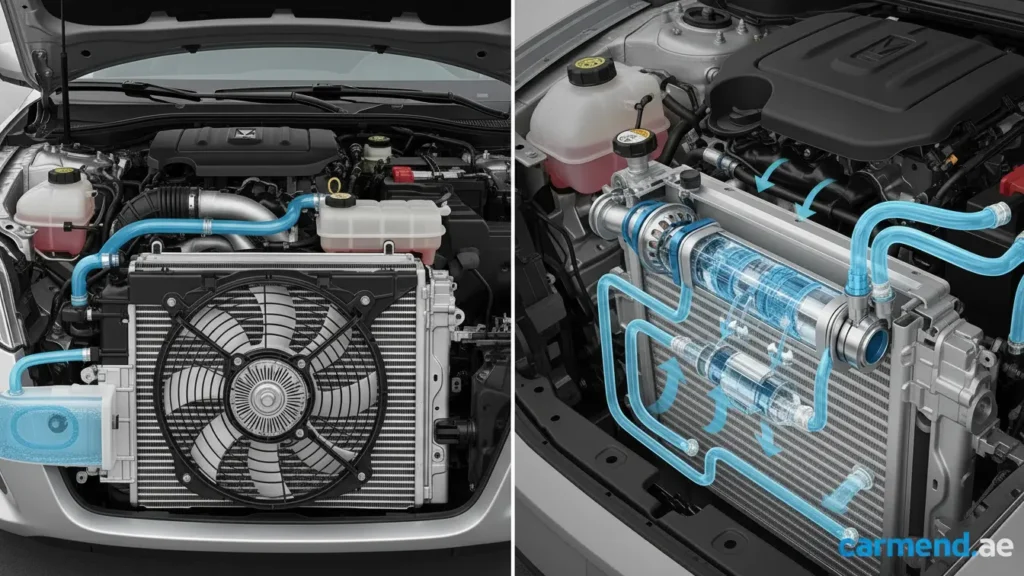
Coolant, also called radiator fluid, is a heat-transfer liquid made from water and antifreeze compounds like ethylene glycol or propylene glycol. It circulates in the engine block, takes away the heat and carries it to the radiator. It there emits the heat to the air and repeats the process one more time.
Benefits of Using Coolant
- Prevents engine overheating and freezing
- Protects radiator and engine parts from corrosion
- Improves heat transfer efficiency
- Lubricates water pump and seals
- Extends engine and radiator lifespan
Most manufacturers design engines to run on coolant, not water. That’s why any trusted car garage in Dubai will always suggest coolant over water.
Is It Safe to Use Water in Your Radiator?
Water can temporarily cool your engine, but it’s not safe for long-term use.In Dubai’s extreme hot temperature, water alone can boil quickly, increasing the risk of engine overheating. This is a common issue seen at many car repair workshops during peak summer months.
Problems with Using Only Water
- Causes rust and corrosion inside the radiator
- Boils faster than coolant in extreme heat
- Can freeze in colder temperatures
- Leads to scale buildup and clogged cooling channels
Coolant vs Water | Technical Comparison Table
| Feature | Water | Coolant |
| Freezing Point | 32°F | 34°F |
| Boiling point | Lower | Higher |
| Engine safety | Short-term only | Excellent |
| Heat resistance | Low | High |
| Maintenance Impact | High | Low |
| Recommended by manufacturers | No | Yes |
Which One Is Better for Your Car?
Coolant is always the better choice for your car. Although water might be effective in an emergency,it should never replace coolant permanently. Coolant is required to enhance maximum engine performance, safety, and longevity, particularly when driving in hot areas such as Dubai.
Any reliable car service center in Dubai will recommend regular checks of the coolant as a routine part of the maintenance.
When Can You Use Water?
Water should only be used:
- In emergencies
- For very short distances
- Until proper coolant is added
Once possible, visit a trusted car garage in Dubai to flush the system and refill with the correct coolant type recommended by your manufacturer.
Importance of Regular Coolant Maintenance
It is important to check and replace your car coolant on a regular basis to help keep the engine cool and prevent overheating. It also protects the radiator and engine components hence making your car run well and long. Failure to change your coolant can lead to:
- Overheating issues
- Radiator leaks
- Engine head gasket failure
- Expensive engine repairs
Get Expert Help from a Car Service Center in Dubai
In case you do not know what kind of coolant your car requires or your car has problems with its cooling system, then it is best to consult an experienced car service center in Dubai. Certified technicians can:
- Check coolant levels and quality
- Flush contaminated coolant
- Inspect radiator, hoses, and water pump
- Prevent future engine overheating problems